All posts by admin

Sciatica

The 5 Natural Ways to Relieve Sciatica


Have you ever experienced aching pain in the back / buttock area that radiates down your leg? You may have sciatica. Sciatica is a common condition that affects up to 1 out of 10 people, typically between ages 25-45.


Symptoms

Sciatica is typically felt as a dull aching pain to the low back / buttock area, that can at times be sharp, depending upon movement. It is generally on one side, but at times can be on both sides. Other symptoms can include numbness and / or tingling, radiating down to certain areas of the leg.

Causes

Sciatica is an entrapment and irritation to the sciatica nerve, which passes from the lower spine, down through the buttock and supplies the back of the leg down to the foot. Typically, sciatica is caused by poor mechanical movement of the hips, pelvis or lower back. This causes abnormal strain and stress to the gluteus and hip rotator muscles. Certain people are more predisposed to sciatica, because their sciatica nerve pierces through the piriformis muscle in the buttock, which makes it more susceptible to irritation.

Pain Relief

The good news is that over 90% of those suffering with sciatica will get better with conservative treatment, especially physical therapy. Physical therapy focuses on improving the mechanical movement of the hip joints, pelvis and spinal joints to relieve pressure on the sciatica nerve. Furthermore, since many muscles are impacted and often weakened, physical therapy helps to restore normal muscle function. This balances the spinal, gluteal and leg muscles.


Try these 5 natural ways to relieve your sciatica: 

  • Improve your posture – One of the long-term causes of sciatica is poor posture. Make sure that you have a lumbar support in your work chair and in your car that you can take with you to different places. Look at the way your computer and desk area is setup. Avoid soft couches and recliners. Physical therapists are experts in ergonomics and can teach you the proper posture setup for workstations and home activities.
  • Change your position frequently – Sitting puts direct pressure on the sciatic nerve. Therefore, it is important to change positions frequently. Consider getting an adjustable standing desk if you have to spend most of your day sitting at a computer. If you are suffering from sciatica, try lying down for 10 minutes, standing for 10 minutes and sitting for 10 minutes. Rotate this throughout the day as much as you can.
  • Try magnesium – magnesium is thought to sooth irritated nerves and many of us have magnesium deficiencies. Try a good magnesium and calcium supplement to soothe pain. However, if you are on medications, consult your physician first.
  • Improve your hip strength and flexibility – The gluteal muscles support the normal walking motions we perform everyday. They become weak and tight with prolonged sitting, especially at a desk job. This causes severe strain on the smaller hip muscles around the sciatic nerve, when walking or standing.
  • Get your body mechanics checked – Most of us do not realize that we have made an adaptation in our normal movements, because of limited joint motion or muscle weakness. Our body is amazing at adapting to problems, however, it can only do this for so long, until abnormal strain and stress occurs. Having a thorough biomechanical movement analysis by one of our trained physical therapists, will pinpoint the exact problem that is causing your sciatica. This allows us to formulate a treatment plan that will help you naturally restore your movement, function and quickly relieve your pain.


For more information on how you can avoid low back pain and sciatica, call us today to speak with one of our physical therapy experts. We can put the spring back in your step and restore your ability to move pain free.

headaches

How to Get Rid of Pounding Headaches for Good

You know the feeling of your eyes starting to hurt, forehead starting to pound and even your neck feeling like a big ball of tension? A headache is coming on again and it’s time to reach for the Advil, Tylenol or other type of pain pill to numb it. Why does this keep happening?

The World Health Organization (WHO) estimates that 47% of the world’s population suffers from headaches. It has been shown that, headaches are a complicated series of electrical events that basically send the nerves around your scalp and even inside your brain into chaos. Headaches can be triggered from a variety of events such as muscle tension, poor neck posture, injuries, allergies and smells. The vast majority of headaches are related to problems with the posture and function of the neck. This places excessive demand on the neck muscles, causing chemical irritation, which then not only irritates the nerves in certain areas of the scalp, but can actually alter blood flow to parts of the scalp and even brain.


Where tension headaches are can tell you the root cause of the problem

  • Headaches in the forehead or back of the head are typically related to problems with the function of C1 or the first vertebrae in the uttermost neck
  • Headaches to the temple area on one or more sides are an indicator of a problem with the C1-C3 areas of the neck
  • Headaches that are preceded by muscle pain in the mid part of the neck, are often caused by limited motion in the lower neck / upper back area C6-T2
  • Headaches happening more at the end of the day are typical of poor muscle endurance and strength of the shoulder and upper back / neck muscles

Fixing the cause of headaches

  • Watch your posture! Sit upright, walk around tall and do exercises standing flat with your back against a wall.
  • Breathe properly. Stressful work and home situations cause your breathing to become shallower. As this happens on a chronic basis, you breathe incorrectly with your neck muscles instead of your diaphragm. Your neck muscles will then tighten up, causing frequent headaches.
  • Improve the flexibility of your neck and upper back joints. Changes in the function and movement of your neck and upper back joints can easily trigger chronic headaches by causing muscle spasms.
  • Drink enough water. More and more research points to chronic dehydration of the body and brain as a cause of headaches. If you drink sodas, coffee, tea and caffeinated beverages, these are actually diuretics, causing your body to eliminate water. Instead of soda or flavored beverages, drink more water!
  • Avoid processed foods and high fat foods. A simple solution is to avoid food that comes in a box. Buy fresh produce and fuel your body. The chemistry of most processed foods builds up to toxic levels in the body and can ruin normal body functions, especially those of the nervous system.
  • Have a regular physical therapy checkup. Physical therapists are the medical experts of body movement and constantly treat patients with headaches. Through restoring proper body posture, strength and joint mobility, headaches can be alleviated for good.


If you find yourself suffering with a headache more than 3 times a month, it is time for you to discover the root cause of your pain, before it becomes a real big problem. Call us today to have a thorough physical therapy evaluation of your neck and spine, discovering the true mechanism of your headaches and finding relief for good!

Poor-posture-man

How to Improve Your Posture


In this world of looking beautiful, posture plays a big role in how we look at people. Think about the last time you saw your posture in the mirror and how you immediately corrected yourself to look taller, slimmer, fitter. We fight the good fight against gravity 24 hours a day and it is up to our muscles and skeletal structure to keep our posture in proper alignment. It is important to note that bad posture is associated with many health problems.


Poor posture contributes to:

  • Back pain and neck pain
  • Headaches and migraines
  • Changes in breathing patterns affecting your blood chemistry
  • Poor digestion
  • Difficulty walking
  • Poor balance
  • Lack of endurance
  • Poor athletic performance


Why you slouch

You have different muscles in your core and deep spine that help you maintain a more upright posture. These muscles are used for long duration contractions to keep your body properly aligned. However, like with all muscles, the less you use them, the more they atrophy and the less they can do their job. With today’s sedentary lifestyles, sitting at work, driving in the car, watching TV, etc., these muscles become weaker and weaker.


What you should do

  • Be more aware of your posture throughout the day and take frequent breaks to move around, be taller, re-adjust your seat.
  • Work on exercises that strengthen your core muscles and your mid back muscles.
  • Do stretching exercises with your back on a wall or lying flat on the ground, moving your arms overhead.
  • Walk or run everyday, trying to be as tall as possible while doing so.
  • Be more conscious of your breathing during the day. Take deep breathes in a better posture, which helps to mobilize your spine.
  • Evaluate your workspace. Is it set up correctly? Is your computer in front of you or off to the side? Is your chair high enough?
  • Avoid soft couches and recliners for long durations, these cause poor posture.
  • Sleep on your back or side with pillows between or behind your knees depending on your position. Try to sleep as flat as possible with one pillow behind your head if possible.


Why you should see a physical therapist

When it comes to posture and the movement mechanics of your body, no one is more qualified than a physical therapist to help you. In physical therapy we evaluate your body mechanics, posture, strength and mobility to evaluate what is needed for you to have better posture. We then custom tailor a plan that will pinpoint what you need to improve your posture, and relieve your pain quickly. We teach you the right exercises to perform that will put you on the path to a pain free life with terrific posture! Call us today to learn more about how we can help you walk tall, pain free.


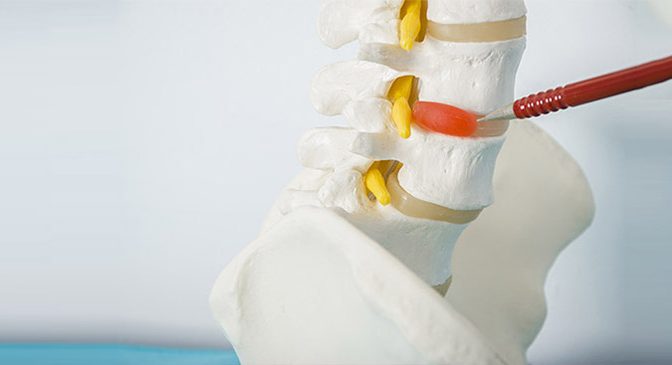
Herniated-disc

How Do You Know if You Have a Herniated Disc?

Do you have sharp pain in a particular part of your arm or leg? It may be a herniated disc. However, it could be another problem. Herniated or bulging discs are often blamed for radiating pains, numbness and tingling in the extremities, but they are often not the culprits.

Herniated discs are caused by the gradual or traumatic tearing of the rings that make up the discs. The rings are much like the cross section of a tree trunk, with a jelly like nucleus in the middle. Discs are the shock absorbers between each vertebra in your spine. Their purpose is to provide stability, support and shape.

All those times you lifted heavy objects poorly or got slightly injured, feeling a sore back or neck, means you could have done micro-tearing of the discs. Over time, this repetitive injury can lead to the nucleus of the disc oozing backwards and out into the canals where your nerves exit from your spine, to different parts of your body.

Herniated discs can occur in all parts of the spine, but typically occur in the lower lumbar levels (L3-S1) or mid cervical (neck C3-C6) levels. Discs swell over night and you can actually gain ½ inch of height, so symptoms are typically worse in the morning.

Here are some common herniated disc symptoms:

  • Gradual numbness or tingling in a specific part of an arm, hand, leg or foot
  • Specific pain in the leg or arm, can be sharp and typically worse in the mornings
  • Difficulty with moving or bending in the mornings
  • Possible weakness in the leg, foot, arm or hand
  • Pain is more one sided


Things to consider:

  • You can have a bulging disc or herniated disc without symptoms and many people do. It doesn’t mean you need to have surgery.
  • Most herniated and bulging discs can be conservatively treated with physical therapy without ever needing surgery.
  • MRIs can show a positive herniated or bulging disc in more than 30% of the population without ever having symptoms. Therefore, just because you have a herniated or bulging disc on an MRI, it doesn’t mean that it is the cause of your symptoms.
  • Sciatica is an impingement of the sciatic nerve, typically deep in the buttock. This can often mimic the symptoms of a herniated disc.


What to do

If you are having radiating pain in the arm or legs, it is best to first see a physical therapist. In most states, you can now see a physical therapist directly without having to go to a doctor first. Physical therapists are medical specialists in analyzing spinal and body movement. We can discover what is the root cause of your pain and treat it naturally, without the need for medication, injections or surgery. By restoring proper movement and strength through specialized techniques many back pains, neck pains and other musculoskeletal problems can be completely treated.

If you are concerned about a possible herniated disc causing your symptoms or have a friend that has the above symptoms, call us today to speak with one of our physical therapists. Discover how we can help you have a pain free and active life.

spinal stenosis

Physical Therapy Just as Effective for Spinal Stenosis as Surgery

A new study published in the Annals of Internal Medicine that followed 169 participants showed that physical therapy was just as effective for people suffering from spinal stenosis as surgery (1). In fact, the results point to what physical therapists have known for decades, people suffering with back pain should try physical therapy first, before considering more invasive procedures.

Spinal stenosis is a common back pain condition that affects people mostly as they age. In the spine there are canals that are formed by the vertebrae in which the spinal cord passes through the nerves branching off it. With arthritis, wear and tear, disc problems, fractures and injuries, the canals can become smaller. In fact, many of the vertebrae will change shape and even grow bone spurs into the canals due to abnormal stresses and strain on the spine. Spinal stenosis can be a very serious condition as the spinal cord and peripheral nerves can be irritated and even compressed.

Common symptoms with spinal stenosis are back pain, radiating pain to the shoulders, arms, buttocks or legs. Often numbness, severe pain and burning sensations can occur with compression. Furthermore, balance can be compromised leading to a greater tendency for falls. Many people with spinal stenosis also find it difficult to walk for 15-30 minutes without increased fatigue to the legs and even pain.

The good news is that there is a lot that can be done to support the vertebrae by building up the muscle support around the spine with the right physical therapy. In addition, by improving motion in areas of the spine with stiffness, the normal loads on the spine can be distributed better.

Tips for helping spinal stenosis back pain:

  • Avoid activities that cause prolonged or repetitive extension of the spine, such as reaching behind you or overhead.
  • Begin a walking program, trying to increase your distance a little more each day.
  • Keep your hips strong. The gluteus muscles help to control the movement of the pelvis, which ties to your low back. Strengthening these improves postural control with walking and movement.
  • Have regular physical therapy checkups with our physical therapists to analyze your spinal movement and strength. We then formulate a plan to improve both.
  • Avoid prolonged sitting, especially in slouched positions such as a soft couch or reading in a recliner.
  • Change positions and move when symptoms occur to alleviate irritation and pressure on the nerves.

Talk to our physical therapists today about our SPINE program and how you can help alleviate your back pain quickly, improve your flexibility and your ability to perform everyday tasks! Call us today to learn more.


Annals of Internal Medicine

Source Reference: Delitto A, et al “Surgery versus nonsurgical treatment of lumbar spinal stenosis” Ann Intern Med 2015; DOI: 10.7326/M14-1420.