All posts by admin

pain

Attention golfers and tennis players. Be sure to use these tips and tricks to avoid pain post-game.

These tips and tricks can help you avoid post-game pain.

  1. Hydrate, hydrate, hydrate

Many athletes tend to hydrate well before a game or match, but often neglect their hydration after exercise. Water regulates body temperature and lubricates the joints, allowing the body to flush out any pesky toxins and aid it in restoring muscle tissue. After you exercise, your goal is to fully replace your fluid and electrolyte loss. As tempting as it may be to have a few beers in the clubhouse to celebrate your golf game or hit the chocolate milk on the way home from the tennis court, it is important to drink water to quench your thirst first. Electrolyte drinks can also be used to rehydrate on days when you sweat particularly large amounts, but be careful. Many sports drinks are loaded with sugar and unnecessary calories.

  1. Stretch

Stretching at the end of your workout can help your body cool down without seizing up. While static stretches can actually increase the likelihood of injury before working out, they can help your muscles ease into rest.

  • Stand near a wall with one foot behind the other. Place your palms on the wall and try to place the heel of your extended leg on the ground for a stretch through the calf and hamstring. Repeat with the other side.
  • To stretch out the arms, especially the triceps that are often sore after tennis and golf, place both hands high above your head. Gently lower one hand until it is touching your back, grasping the elbow with your other hand. Gently pull your elbow until you feel a stretch in your triceps. Repeat with the other arm. 
  • For your lower back, sit in a chair with your feet flat on the floor. Keeping your hips on the chair, gently turn your body until you feel a stretch in your lower back. Hold for 30 seconds and repeat with the other side.
  1. Eat Protein

Eating a small meal rich in protein can aid in muscle recovery after exercise. Some people use this as an excuse to have a big steak or a greasy cheeseburger after 18 holes. In reality, 20 to 30 grams of protein amounts to three whole eggs, one container of Greek yogurt, three ounces of chicken, or four ounces of lean beef. Opting for lean protein sources can also keep your weight on track. 

Post-game pain is not inevitable. Using these few tips and tricks, you too can be back out on the links or at the court as soon as you want. If you need help with your recovery process or for more information on how physical therapy can help you regain your swing, contact Rehability Physical Therapy.


sciatica

Sick of sciatica? What you can do at home to relieve your sciatica pain.

Sciatica is one of the most common back pain complaints in the country. Yet few patients truly understand what sciatica is or what can be done at home to help relieve the often persistent, radiating pain into one or both hips.

What is sciatica?

Sciatica is not itself a diagnosis, but rather a term used to describe a set of symptoms associated with a spinal condition. The largest nerve in the body, the sciatic nerve travels from the lower back through the buttocks and down each leg to communicate messages to the muscles in both legs. Muscles that are in spasm, herniated discs, bone spurs, pinched nerves, or other spinal joint issues can all compress the sciatic nerve, causing pain that often radiates through the buttocks and down one or both legs. 

How Can I Relieve Sciatica at Home?

As painful as sciatica can be, the first mistake most people make is deciding to limit their physical activity. While rest may be appropriate for particularly painful sciatic nerve pain, the loss of muscle tone that results from a sedentary lifestyle may actually make sciatica worse.

Exercise

Strong core and back muscles improve posture and increase the body’s ability to hold the spine in its proper place. This, in turn, relieves a lot of sciatic nerve pain.  Appropriately stretching the muscles in the back and strengthening the core without the jarring motions of running or jumping can help tremendously. Walking and light weight training can also improve sciatic pain without compromising the integrity of the spine. 

Stretch

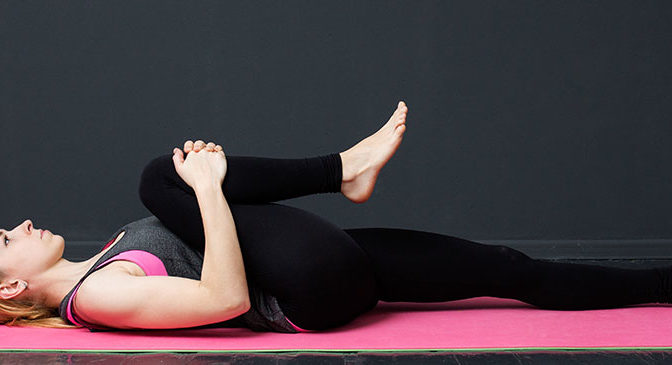
Lying flat on your back, bring one knee toward the opposite shoulder and hold it there to the count of 30. Be sure to breathe and keep your opposite leg straight. Repeat with the other side. You can also sit on the floor with your legs out in front of you, your back straight. Bring one foot to the outside of the opposite knee. With both hips on the floor, gently turn your body toward your bent knee. Hold for 30 seconds then gently unwind and reposition yourself to repeat the exercise with the other side. Do not perform these stretches if they aggravate your sciatica pain.

Ice & Heat

For particularly painful days, using ice or alternating ice and heat may offer relief. As tempting as it may be to sit with a heat pack for prolonged periods of time, ice is known to reduce inflammation that causes sciatic pain. Alternating between the two will allow the body to receive both the anti-inflammatory properties of cold and the muscle relaxant properties of heat.

Lay Flat on Your Back

As alluring as it may be, resist the temptation to lay on your bed. Instead, opt for laying on the floor with a pillow beneath your knees. While it will not keep your body moving and improve your circulation, resting in such a position may offer temporary relief from a sciatica flare up.

For more information on any of these methods or if you need help on your road to recovery, contact Rehability Physical Therapy today.


breathing

The Importance of Proper Breathing for Your Overall Health.

It is not called “The Breath of Life” for nothing. One of the most basic functions of the human body, breathing not only fuels the body with oxygen, it can also clear a foggy mind and help strengthen the muscles. Yet few people learn how to breathe in a way that allows the body to function the way it should.

The Process of Breathing

Before you can understand proper breathing techniques, it is important to know a little about how your body breathes. When you breathe in, or inhale, the muscle on the bottom of your ribcage, called your diaphragm, contracts and moves downward. This allows the lungs to have ample room to expand. The muscles between your ribs, called the intercostal muscles, contract to pull your ribcage upward and outward. As your lungs expand, air is sucked in through your nose and mouth and travels down your trachea to your lungs. After passing through your bronchial tubes, the air finally reaches the air sacs where oxygen is passed into the blood stream. At the same time, carbon dioxide travels into the air sacs from the blood stream and is expelled from the body as you exhale. On average, this process is repeated between 17,000-30,000 a day, every day, as long as a person is alive.

A Better Way to Breathe

Since the are so many systems at play with each and every  breath, it is important to allow all of these coordinating processes to work they way they should.

  • This begins, first and foremost, with great posture. Sitting up straight allows the lungs to expand quickly and efficiently with every breath. Likewise, sitting up straight helps air to travel into the lungs and carbon dioxide to travel out of the lungs unimpeded. If you are sitting at your desk and feel foggy or otherwise uninspired, take a moment to reposition your body with a straight back to notice an immediate improvement at how well oxygen is reaching your bloodstream and thereby your brain.
  • While many people focus on completely inhaling in order to improve their breathing, most people only exhale 70 percent of the carbon dioxide in their lungs. Try, instead to push all of the air out of your lungs as though you are blowing bubbles. Not only will your body reward you with instant energy, you will notice how much more efficient you are in filling your lungs.

The Breath/Health Connection

Every system in the body relies on oxygen. From cognition to digestion, effective breathing can not only provide you with a greater sense of mental clarity, it can also help you sleep better, digest food more efficiently, improve your body’s immune response, and reduce stress levels. Many people who practice yoga, especially those who focus on the practice of  Pranayama, or breath control, have been shown to regulate the sympathetic nervous system, or the part of the body that controls breathing, heart rate and blood pressure. 

For more information on how proper breathing can affect your overall health or for help in your recovery, contact Rehability Physical Therapy today to find out how physical therapy can help you.


surgery

Why Physical Therapy Is Important Before You Have Surgery


It is easy to see why physical therapy is important after surgery. Not only can it help minimize the development of scar tissue around the wound, it can also help a person heal faster and return to full mobility. It may be a little more difficult to see why you need physical therapy before surgery, but participating in it before going under the knife may be even more beneficial in the long run.

Pre-Operative Physical Therapy Reduces Recovery Time

A recent study revealed that pre-operative physical therapy reduces post-operative care by as much as 29 percent in patients who have a total knee or total hip replacement. Not only does this translate to a significant cost savings, it also means recovery time is shortened. Best part? You can see results in as few as one to two pre-operative physical therapy sessions. In cases of a total knee or total hip replacement, pre-operative physical therapy sessions tend to focus less on building muscle or improving flexibility and more on training on walkers, planning for recovery and teaching patients basic exercises they will perform after surgery.

Pre-Operative Physical Therapy Can Shorten Hospitalization

Patients who are prone to complications after surgery or who are at a high probability for transfer to an acute care rehabilitation facility can shorten the length of their stay with pre-operative physical therapy. From joint replacement to cardio-thoracic surgery, low intensity exercise, under the guidance of a physical therapist, improves circulation which in turn speeds the body’s healing response. Likewise, patients who build muscle in their core, arms, legs, and back are less likely to experience large amounts of atrophy during their recovery. Such atrophy often delays a patient’s return home even if they are healing well. Even a patient’s balance can be improved before surgery, diminishing the likelihood of falling afterward, which could result in longer hospital stays. 

Pre-Operative Physical Therapy May Prevent Surgery Altogether

Even though pre-operative physical therapy meets a different objective than post-operative physical therapy, working with a therapist before surgery may yield a shocking result. You may not need surgery. While this is not the case with patients who are planning for total joint replacement, physical therapy may help soft tissue injuries heal while restoring function without going under the knife. People tend to think of PT as something you do after surgery. In reality, physical therapists are experts in restoring movement and function throughout the body, with or without surgical intervention. If you are planning to have surgery on any soft tissues in your body, give pre-operative physical therapy a try first. You may be surprised by your results.

From improving recovery times and shortening hospital stays to improving function and healing of soft tissue injuries, pre-operative physical therapy is a vital key to returning you to activity. If you are in the process of scheduling elective surgery, let Rehability Physical Therapy help you prepare to have the best possible outcome before and after.


hip-flexor

Four at home exercises for your hip flexors

There are few things more painful than hip flexors that stop working the way they should. Ranging from a dull ache to stabbing pains in the pelvis or groin area, problems with hip flexors can stem from overuse, underuse, improper use, and a lack of good stretching habits. Fortunately, there are four at-home exercises that are designed to stretch out these muscles and offer relief from pain or discomfort.

  1. One Knee Up 

Kneel on the floor on one knee with the other foot planted on the floor. With your pelvis tucked under your hips, gently move your body forward as you keep your back straight. Once you begin to feel the stretch in your upper thigh, stop moving forward and instead hold the stretch for 30 seconds. You may find that the longer you hold the stretch, the easier it becomes. Gently inch forward again until you feel the stretch in your upper thigh. Switch legs. Repeat three times per leg. Don’t hold this stretch for longer than 30 second intervals as it will not improve your flexibility and may result in injury. 

  1. All Fours

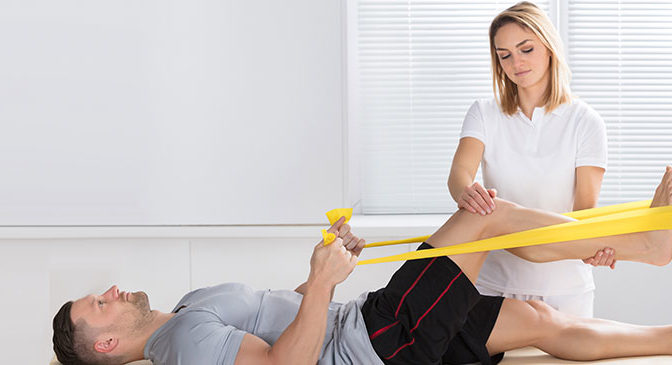
Tie one ankle to a chair or pole with resistance tubing. On your hands and knees, slowly bring the knee of the tied ankle to your chest. Hold for 5 seconds and slowly return it to the starting position. You should feel resistence in both directions as your hip flexor works to move your hip back and forth. Do two sets of 10 repetitions on each leg.

  1. Seated Hip Flexor Stretch

This is an ideal exercise to do while sitting in an office chair. Adjust the chair height so when your feet are planted on the floor, your leg forms a 90 degree angle at your knee. With one foot on the floor, raise the other leg so it is straight in front of you, parallel to the floor. Keeping it straight, raise it until your leg is waist high, then lower it so it is parallel to the floor. Repeat 2 sets of 10 repetitions on each leg.

  1. Marching Stretch

Standing up straight and tall, bring one leg up as close to your chest as possible as though you are marching in place. Hold it there for 5 seconds then return it to the starting position. Repeat with the other leg. If you cannot balance effectively on one foot, this same exercise can be done with your back near a wall. Just be sure to stand as straight as possible while stretching alternating legs.

One of the best ways to avoid hip flexor pain is to avoid staying seated for too long. Those who are physically active or who take periodic breaks from seated work are less likely to develop pain over time. Even if you have a regular exercise routine, ensuring your core muscles are strong and can stabilize your hips will dramatically affect your level of pain in your hips. If you are still experiencing hip flexor pain or would like additional information about any of these exercises, contact Rehability Physical Therapy today.